
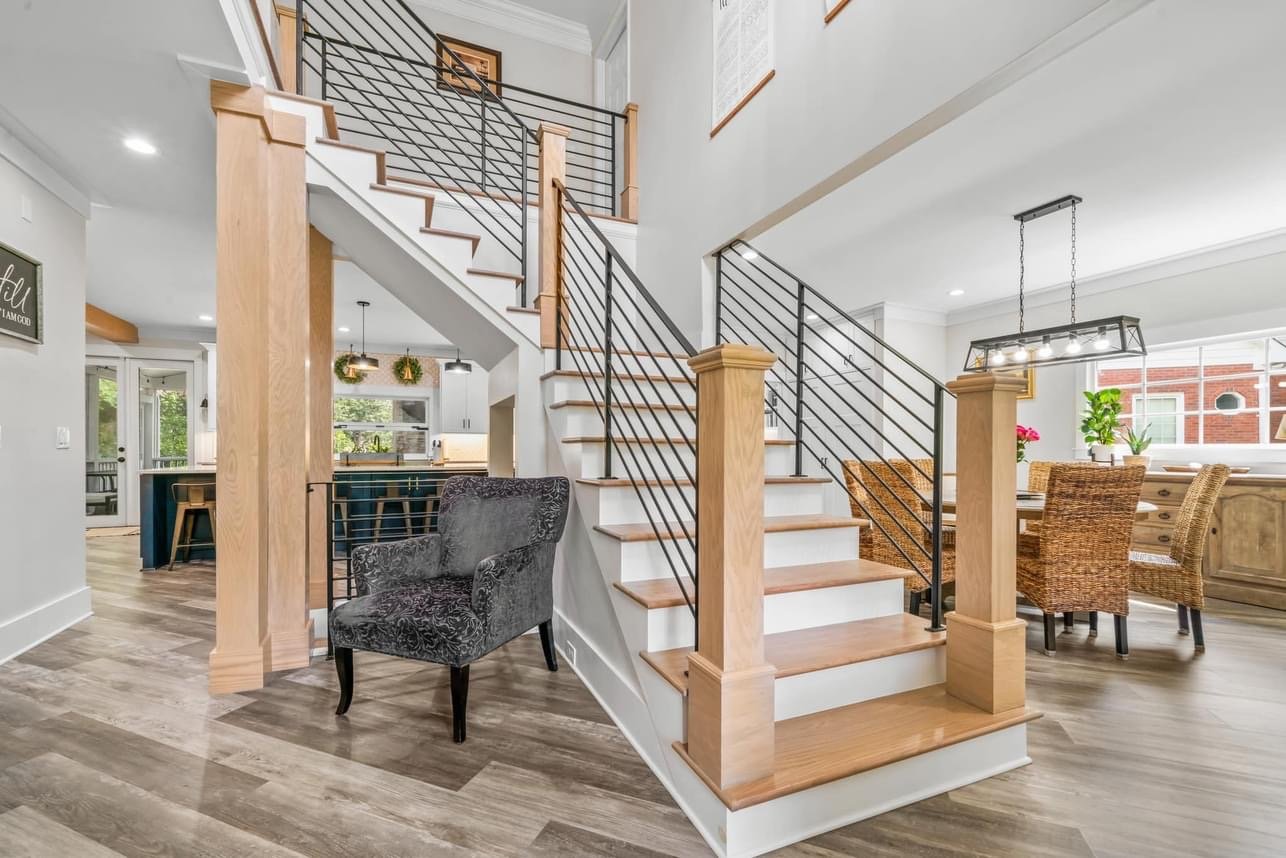
How to Hire a General Contractor in North Georgia
How to verify a license, read three bids that are not the same bid, understand who reviews your permit, and protect yourself in the contract. Written by the contractor who has to live with the answer.
What This Guide Covers
- What a general contractor actually does
- Starting with “general contractor near me”
- Verifying the license
- Verifying insurance and workers’ comp
- Who reviews your permit
- Reading three bids that disagree
- What the contract has to contain
- Deposits, draws, and lien law
- The questions to ask before you sign
- Red flags worth walking away from
- Checking references properly
- What happens when something goes wrong
- Design-build versus hiring separately
- Questions we get every week
Most homeowners hire a general contractor two or three times in their entire life. The person sitting across the table from them has done this several hundred times. That imbalance is the real problem with hiring a builder, and almost every bad outcome we have been called in to rescue traces back to it.
This guide closes that distance. It is written for homeowners in Forsyth, Fulton, Cherokee, Hall, Dawson, Gwinnett, Lumpkin, Pickens, and DeKalb counties, and it covers what you can verify before you sign, what a fair contract looks like, what the law in Georgia actually gives you, and where the risk really sits. Some of it makes our own job harder. We would rather you know.
What a general contractor actually does
A general contractor is the party who holds the contract for the whole project and is responsible for delivering it. Not a piece of it. All of it. The GC prices the work, pulls the permits, hires and schedules the subcontractors, orders the materials, meets the inspectors, fixes what fails inspection, and carries the liability when something goes wrong at two in the morning.
That is a different job from the ones it gets confused with, and the distinctions matter because they determine who is legally on the hook.
| Role | What they are responsible for | What they are not |
|---|---|---|
| General contractor | The entire project: permits, schedule, subcontractors, materials, inspections, warranty | Not necessarily the designer, unless the firm is design-build |
| Custom home builder | Ground-up construction, usually including site work and utilities | Not always set up for remodel work inside an occupied house |
| Remodeler | Renovation of existing structures, occupied-home logistics | Not always licensed or staffed for structural or ground-up work |
| Subcontractor | One trade: electrical, plumbing, HVAC, framing, tile | Not responsible for other trades or the overall schedule |
| Handyman | Small repairs and maintenance under the state threshold | Not licensed to perform work requiring a contractor license |
| Architect or designer | Drawings, specifications, permit documents | Not the party building it, unless the firm is design-build |
The practical version: if you hire trades directly and coordinate them yourself, you have become the general contractor. Every scheduling conflict, every failed inspection, every dispute about whose work caused the leak is now yours. Homeowners do this successfully. Most of them only do it once.
The one-sentence version
You are not buying labor and materials. You are buying somebody’s judgment, their subcontractor bench, and their willingness to come back in eighteen months when a joint opens up.
Starting with “general contractor near me”
Almost every search starts this way, and it is a reasonable instinct. Proximity is genuinely useful in construction. A contractor forty minutes away shows up for the punch list. A contractor two hours away sends somebody, eventually.
But the results that search returns are a mix of three very different things, and telling them apart is the first real skill.
The map results
These are Google Business Profiles, ranked heavily on physical proximity to wherever you happen to be standing. A firm appears here because its pin is close to you, not because it is qualified for your project. Useful for finding candidates. Useless as a filter.
The lead-generation directories
Angi, Thumbtack, HomeAdvisor, Porch and similar sites occupy most of the first page. They are advertising marketplaces. Submitting a form there typically sells your contact information to several contractors at once, which is why the phone starts ringing within minutes. The contractors who buy those leads are paying for them, and that cost lives somewhere in your price.
The contractors’ own sites
The firms themselves. Slower to surface, but this is where you can actually see completed work, license numbers, real project addresses, and whether the company has any history in your specific county.
The better search is not “near me.” It is “who has built in my jurisdiction.” A contractor twenty minutes away who has never filed a permit with your city is going to learn that building department on your schedule. One who files there monthly already knows which reviewer flags what, and that difference is worth more than fifteen minutes of drive time.
Set your radius by county, not by miles. Then check whether each candidate has actually completed projects inside it. Our own work spans Cumming, Alpharetta, Johns Creek, Milton and the surrounding North Georgia counties, and the reason we publish those pages separately is that the process genuinely is not the same from one to the next.
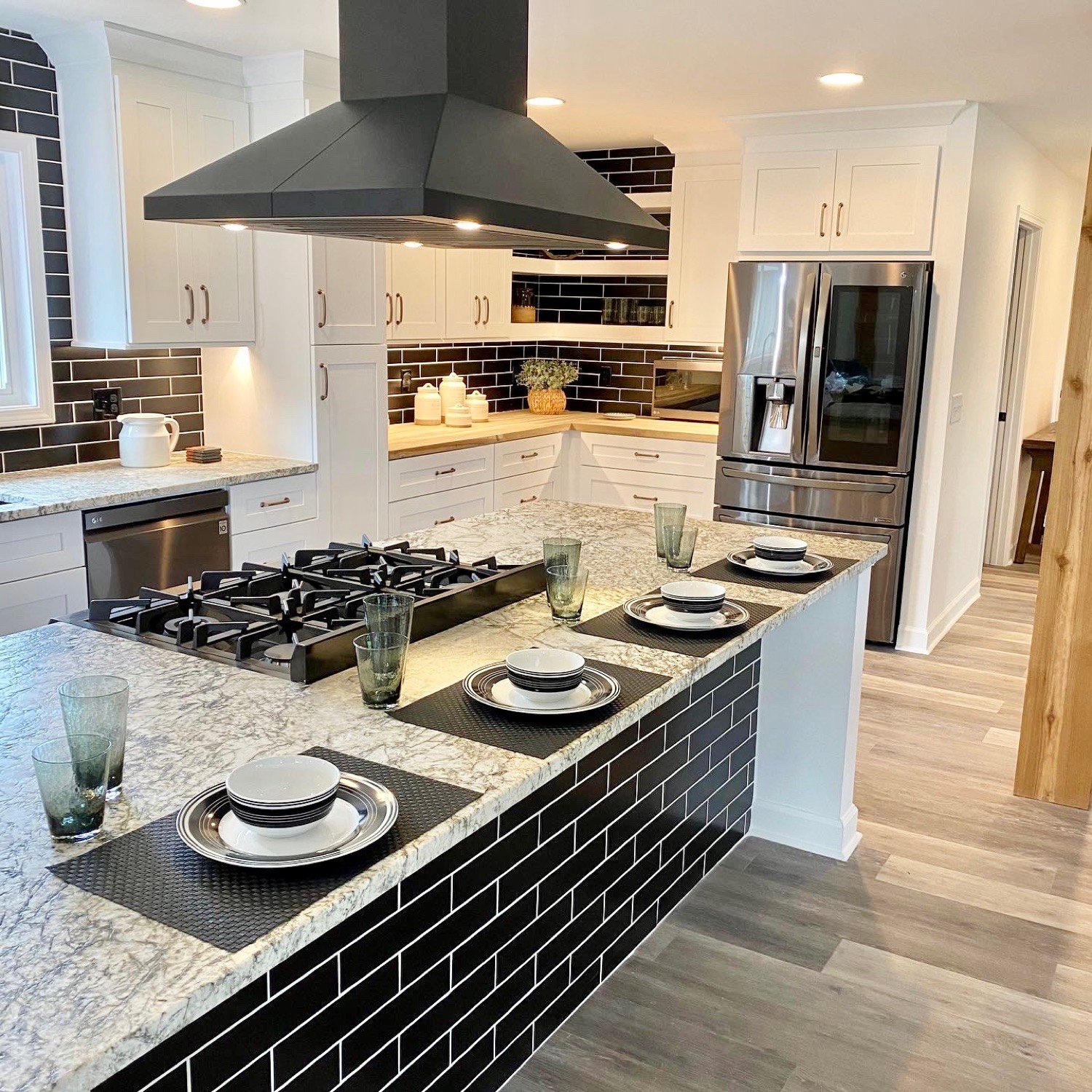
Verify the license before you hire a general contractor
Georgia licenses residential and general contractors through the State Licensing Board for Residential and General Contractors, which sits under the Secretary of State. The board issues four classifications, and they are not interchangeable.
| Classification | What it permits |
|---|---|
| Residential-Basic | Residential structures of no more than three stories |
| Residential-Light Commercial | Everything above, plus multifamily and light commercial buildings |
| General Contractor, Limited Tier | Any type of construction, on contracts under $1,000,000 |
| General Contractor | Any type of construction, with no contract value limit |
Every classification requires passing a state examination, including a business and law component, and carrying general liability insurance. For a typical home renovation or addition, any of the four is sufficient. For a large custom home or anything unusual, the classification tells you whether the firm is licensed for the size of the job it is bidding.
The $2,500 line
Georgia has no handyman license. Under O.C.G.A. § 43-41-2, residential contractor licensing is triggered once the total value of the work, or the compensation the contractor receives for it, whichever is higher, exceeds $2,500. Below that line the work can be performed unlicensed. That threshold is the entire exemption. It does not scale with how simple the work looks, and it never covers electrical, plumbing, or mechanical work, which require their own trade licenses regardless of price.
So when a very competitive number arrives from somebody who does not carry a license, the question is not whether they are good. Plenty are. The question is what you give up by hiring them.
What Georgia law says about unlicensed contracts
Under O.C.G.A. § 43-41-17, a contract for work requiring a license, entered into with a contractor who does not hold a valid one, is unenforceable by that contractor. That sounds like it favors you. It does not.
An unenforceable contract is a weak instrument in both directions. Your warranty terms, your schedule, your allowances, your remedies all sit inside a document a court may treat as void. You are relying entirely on goodwill, and goodwill is exactly what runs out when a project goes badly.
How to actually check
This takes about four minutes and almost nobody does it.
- Ask for the license number in writing. A licensed contractor will hand it over without hesitation, and most put it on the estimate already.
- Go to the Georgia Secretary of State license verification search and look up the number or the company name.
- Confirm three things: the license is active, the name on the license matches the entity that will sign your contract, and the classification covers your project.
- Check for any disciplinary history attached to the record.
- Separately confirm that the electrical, plumbing, and HVAC work will be performed by trade-licensed subcontractors, not by general labor.
The name mismatch is the one people miss. A qualifying agent’s license belongs to a specific entity. If the license is held by one LLC and your contract is written by a different one, the license does not cover your job. Ask the question plainly: is the company on this contract the company that holds this license?
For the record
GHIR Construction holds Georgia unlimited general contractor licenses #GCCO006076 and #GCQA006072, and Florida license #CGC1527188. Those numbers are on every proposal we send, and we would encourage you to verify them the same way you verify anybody else’s.
Verifying insurance, and doing it the right way
There is a specific way this goes wrong. A contractor emails you a PDF certificate of insurance. It looks legitimate. It expired four months ago, or it was cancelled for nonpayment three weeks after it was issued, or it was never real to begin with. A certificate is a snapshot, not a guarantee, and a PDF forwarded by the person it covers is the weakest possible version of it.
Request the certificate directly from the insurance agent, not from the contractor. Ask that it be sent to you, listing your name and project address. Any legitimate contractor will make that introduction in a single email. It costs them nothing and takes a day.
What you are looking for
General liability
Covers property damage and injury caused by the contractor’s work. Georgia requires licensed contractors to carry it, with minimums that vary by classification. Confirm the policy is current and that the coverage limit is sensible relative to the value of your home, not just the value of the project.
Workers’ compensation
Georgia requires workers’ compensation coverage from businesses that regularly employ three or more people. This is the coverage that matters most to you personally. If an uninsured worker is injured on your property, the claim has a way of finding its way to your homeowner’s policy, and your carrier will not be pleased about it.
Subcontractor coverage
Ask how the contractor verifies that each subcontractor carries their own insurance, and how often. A firm with a real process will describe it immediately, because they collect certificates every year. A firm without one will get vague.
Who reviews your permit, and why it changes the answer
North Georgia is not one building department. It is a patchwork of counties and incorporated cities that each run their own review, keep their own submittal requirements, and hold their own inspection sequence. Two houses eleven miles apart can have completely different paths to a permit.
This is the single most underestimated variable in a residential schedule. Ask any candidate contractor a direct question: who has jurisdiction over my address, and what do they require first? A contractor who has worked in your city answers instantly. A contractor who has not will say they will look into it, and that lag will repeat itself for the length of your project.
| Community | Who reviews the permit | The local step that catches people |
|---|---|---|
| Cumming | Forsyth County Building & Licensing, or the City of Cumming if the parcel is inside city limits | Many Cumming addresses are actually unincorporated county. On septic, Environmental Health approval has to be obtained before the permit application is submitted. |
| Alpharetta | City of Alpharetta Community Development | HOA architectural review runs on a separate track from the city and does not wait for it. Windward and the established swim and tennis communities expect a complete submittal. |
| Milton | City of Milton Community Development, filed through the CityView portal | Most of Milton is zoned AG-1 with a four-acre minimum and design standards written around rural character. Setbacks and accessory structures need to be planned from the first sketch. |
| Johns Creek | City of Johns Creek Building Division, via the Customer Self-Service portal | A larger project also routes through Planning & Zoning, Land Development, and the Fire Marshal. Each is its own review. |
| Sandy Springs | City of Sandy Springs Community Development, separate from Fulton County | Tree preservation and stream buffer rules near the Chattahoochee can reshape a site plan after you think it is finished. |
| Canton | Cherokee County Development Service Center on Bluffs Parkway | On septic, the Environmental Health application goes in before the building permit application. The first inspection is erosion control, and no work is supposed to start until it passes. |
| Gainesville | Hall County Building Inspections, or the City of Gainesville for parcels inside city limits | The two submittal packages are not the same, and city remodels are usually split into separate building, electrical, mechanical, and plumbing permits. |
| Buford | Gwinnett County or Hall County, depending on which side of the line the parcel falls | Buford straddles two counties. Confirming the correct department before drawings are finished is not optional. |
| Suwanee | City of Suwanee and Gwinnett County | Jurisdiction depends on the parcel, and North Gwinnett HOA review frequently runs alongside the city process. |
| Dahlonega | Lumpkin County, plus the Dahlonega Historic Preservation Commission in the historic districts | Property in the Central Business or B-3 Historical Business districts needs a Certificate of Appropriateness before exterior work starts, reaching as far as siding, windows, doors, and paint. A duct and envelope tightness test is due before the certificate of occupancy. |
| Jasper | Pickens County, with state approval required on land disturbance plans | Disturbing more than an acre requires a land disturbance permit the state approves before the county can issue it, plus a seven-day letter signed by a licensed design professional before site work. |
| Dunwoody | City of Dunwoody, its own permitting authority rather than DeKalb County | Every single-family project goes through plan review rather than over the counter, and the city allows up to ten business days for it. |
None of this is exotic. It is ordinary municipal process, and it is entirely knowable in advance. The reason it derails projects is that it is usually discovered rather than planned, and by then the framing crew is already scheduled.
A contractor who has to learn your building department is learning it on your calendar and on your money.
One more thing worth saying plainly: HOA architectural review is not a permit and a permit is not HOA approval. They are separate approvals from separate bodies with separate timelines, and a project can clear one and be stopped cold by the other. We covered that process in detail in our guide to HOA architectural review in Alpharetta, and the mechanics are similar across most North Fulton and Forsyth communities.
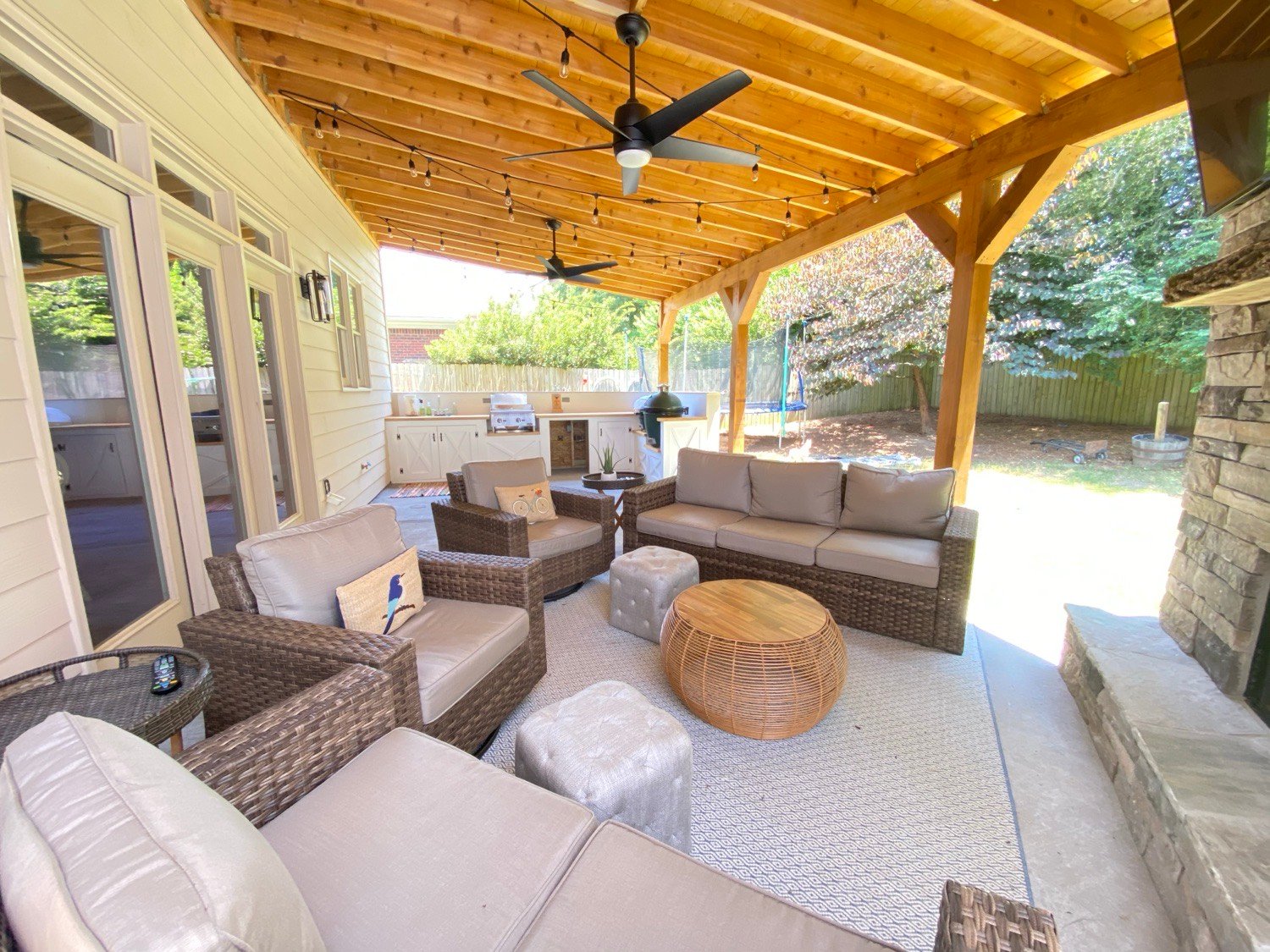
How to read three bids that are not the same bid
The standard advice is to get three quotes. It is good advice and it is incomplete, because the three numbers that come back are almost never priced against the same scope. Comparing them directly is how homeowners end up choosing the contractor who simply forgot the most.
A low bid is usually low for one of four reasons, and only one of them is good news.
The scope is smaller
Something is excluded that the other two included. Demolition, disposal, permit fees, painting, final cleaning, the electrical panel upgrade the inspector is going to require anyway. It reappears later as a change order.
The allowances are set low
An allowance is a placeholder dollar amount for something not yet selected: tile, plumbing fixtures, cabinets, lighting. Set them low and the bid looks competitive. You discover the truth at the showroom, where nothing in the budget resembles what you had in mind.
The overhead is not real
No insurance, no workers’ comp, no license, no office, no warranty reserve, cash subs. The price genuinely is lower. So is what you are actually buying.
They are genuinely more efficient
Better subcontractor relationships, better purchasing, tighter scheduling, less time on site. This one is real and it does happen. It is also the least common of the four, and it is the one you can verify by looking at their completed work.
Normalize before you compare
Put the three proposals side by side and build a single list of every line item that appears on any of them. Then go through each proposal and mark whether that item is included, excluded, or unaddressed. The unaddressed column is where the money is.
Line items to confirm on every bid
If a proposal is silent on any of these, it is not silent on the cost. Ask before you compare.
- Demolition and debris disposal
- Permit fees and who pays them
- Architectural and engineering drawings
- Structural engineering, if walls are moving
- Electrical panel capacity and any upgrade
- HVAC load and any equipment change
- Plumbing rerouting and supply line replacement
- Insulation and energy code compliance
- Drywall finish level and paint
- Flooring transitions and subfloor prep
- Every allowance amount, itemized
- Appliance delivery and installation
- Countertop template, fabrication, and install
- Final clean and punch list
- Dumpster, portable toilet, site protection
- Warranty term and what it covers
Ask each contractor to price the same allowance numbers. Give all three the same figure per square foot for tile and the same dollar amount for plumbing fixtures. Suddenly the proposals are comparable, and the differences that remain are real differences in labor, overhead, and margin rather than differences in optimism.

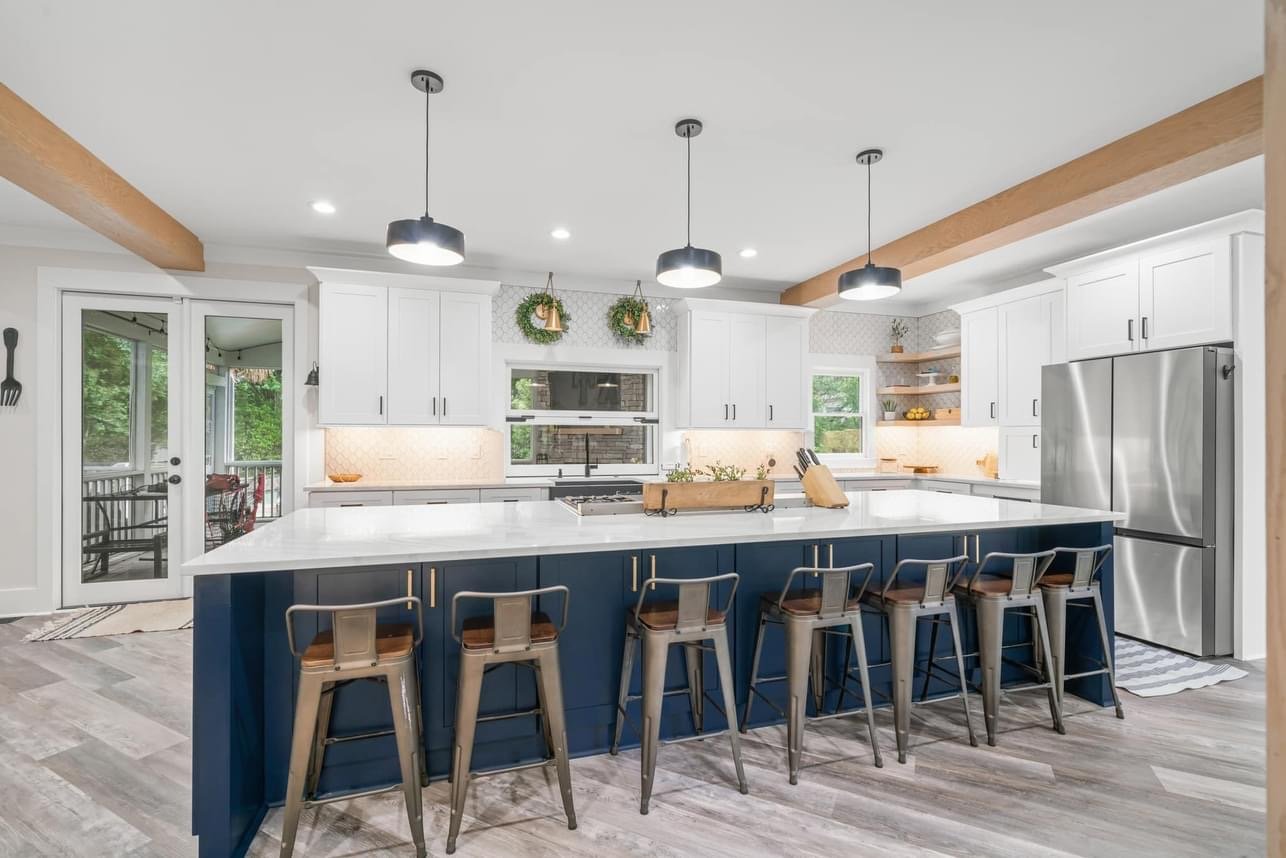
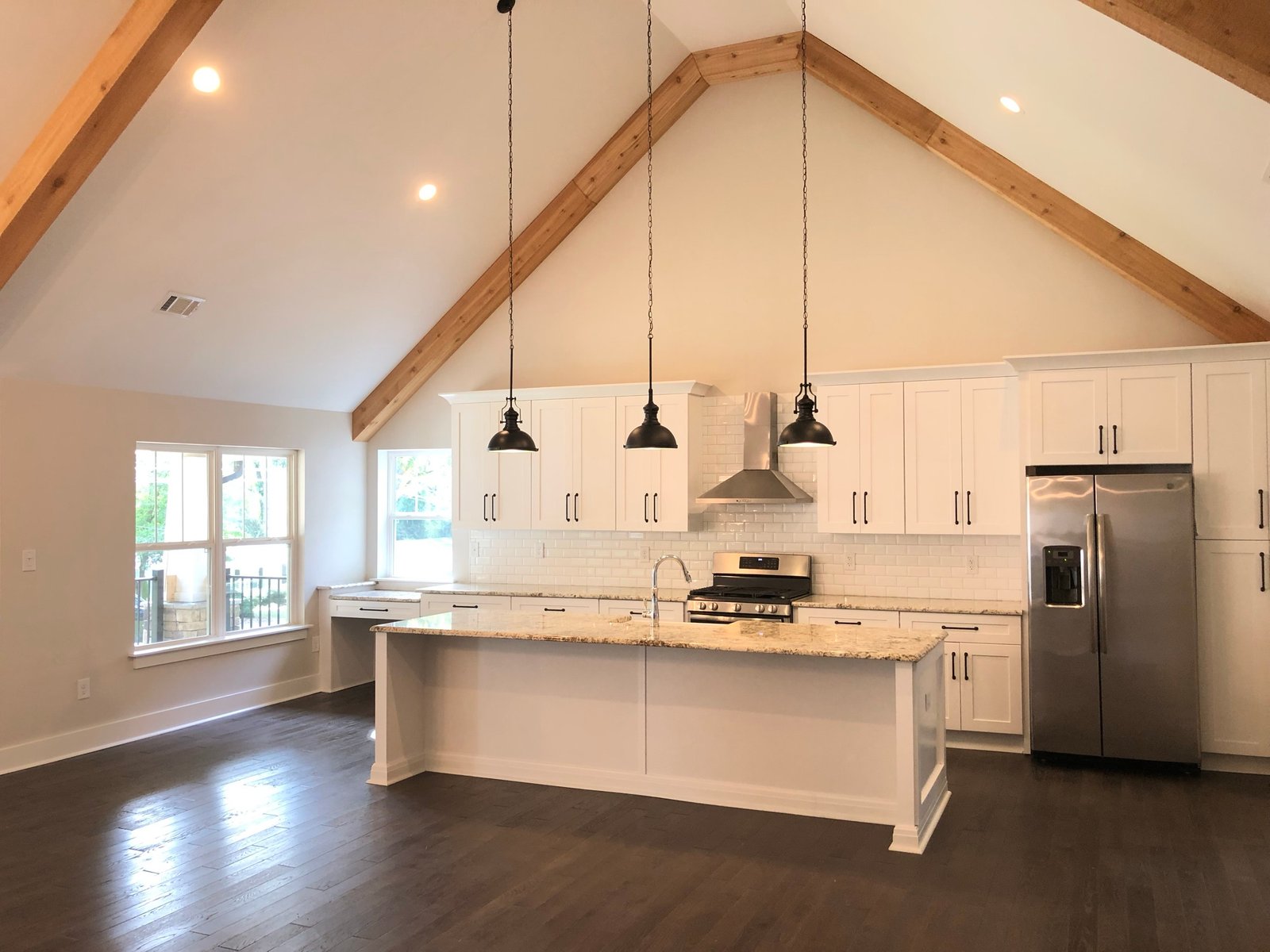
These two kitchens are close in size. They are not close in price, and the reason is almost entirely in selections rather than in construction. That is why a bid without itemized allowances tells you very little. The number that matters is not the total on page one. It is what the total assumes about the things you have not chosen yet.
A note on the cheapest bid
We have been the high bid and lost. That is a fair outcome, and sometimes the other contractor was simply better set up for that job. What is not fair to you is a low number that was never achievable, because the correction always arrives after demolition, when your leverage is gone and your kitchen is in the garage.
What the contract has to contain
A one-page proposal with a total and a start date is not a contract. It is an invitation to argue later. On a project of any real size, the document should be specific enough that a stranger could read it and know exactly what is being built, when, and for how much.
Scope of work, in detail
Room by room, trade by trade, including what is explicitly excluded. Exclusions are not a red flag. Unstated exclusions are.
Itemized allowances
Each allowance broken out separately, with the unit basis stated. “Tile allowance: $9.00 per square foot, material only, 480 square feet” is useful. “Tile allowance: $4,000” is a coin flip.
Schedule with milestones
Start date, substantial completion date, and the intermediate milestones. Also what happens to the schedule when a permit review runs long or a material back-orders, because both will happen.
The change order process
Written, priced, and signed by you before the work is performed. No verbal approvals. This single clause prevents more disputes than everything else in the contract combined.
Payment schedule tied to progress
Draws that correspond to completed milestones, not to the calendar. You should never be substantially ahead of the work.
Lien waivers with every draw
A signed waiver from the general contractor and from every subcontractor and supplier paid out of that draw. This is the clause that protects your title, and it is covered in detail in the next section.
Warranty terms
Length, what is covered, what is excluded, and how you make a claim. A one-year workmanship warranty is common. What matters more is whether the company will still exist and answer the phone.
Dispute resolution and termination
How disagreements get resolved, and what happens if either party needs to end the contract. Nobody enjoys reading this clause. Everybody who has needed it wishes they had read it.
Deposits, draws, and the part of Georgia lien law nobody explains
This is the section homeowners skip and later wish they had not. Georgia’s mechanics lien statute contains a possibility that surprises almost everyone the first time they hear it.
You can pay in full and still get a lien on your house
If your general contractor is paid but does not pay a subcontractor or supplier, that unpaid party can file a mechanics lien against your property. Not against the contractor. Against the house. The fact that you already paid does not automatically defeat it.
This is not a loophole. It is how the statute is built, and it is why lien waivers exist.
The deadlines that govern it
| Step | Deadline |
|---|---|
| Notice of Commencement filed | Within 15 days of work starting, with the Clerk of Superior Court in the county |
| Notice to Contractor from a sub or supplier | Within 30 days, where a Notice of Commencement was recorded |
| Claim of lien filed | Within 90 days of the last labor or materials furnished |
| Lien waiver becomes conclusive | Payment is conclusively deemed made 90 days after the waiver is executed, unless a claim of lien or affidavit of nonpayment is filed first |
| Lawsuit to enforce the lien | Within 365 days of the lien being recorded |
The waiver rule in the fourth row is the one worth understanding. Under O.C.G.A. § 44-14-366, when a subcontractor or supplier signs an interim or final lien waiver in anticipation of payment, that payment is conclusively presumed to have been made 90 days later unless they file a claim of lien or an affidavit of nonpayment within that window. In practical terms, collecting waivers at each draw and letting that clock run is what closes your exposure.
What this means for how you pay
- Keep the deposit reasonable. A modest deposit to secure a place in the schedule and cover initial material orders is normal. A demand for half the contract value up front is not, and it inverts the risk of the entire project onto you.
- Tie draws to completed milestones. Rough-in passed. Drywall complete. Cabinets set. Not the first of the month.
- Never let payment run ahead of progress. The moment you are meaningfully paid up on work that is not finished, your leverage is gone and so is your remedy.
- Collect a lien waiver with every single draw, from the general contractor and from every subcontractor and supplier that draw covers. Make it a condition of payment in the contract, not a favor you ask for later.
- Hold a final retainage until the punch list is genuinely complete and you have final unconditional waivers in hand.
- Pay the company, not a person. Checks to the business entity on the contract. Cash creates no record, and a project with no payment record is very hard to defend.
How we handle it
Draws are tied to milestones in the contract, lien waivers travel with each payment, and the schedule of values is written out before work starts so nobody is guessing what a given draw covers. This is ordinary professional practice. If a contractor resists any part of it, that resistance is itself the answer.
The questions to ask before you hire a general contractor
Print these. Take them to all three meetings. The content of the answers matters, and so does the ease of them. A contractor who has run a real business for a decade answers these without effort, because they get asked constantly.
License, insurance, and structure
- What is your Georgia license number and which classification do you hold?
- Is the entity on this contract the same entity that holds the license?
- Will you have your insurance agent send me a certificate directly?
- Do you carry workers’ compensation, and how many employees do you have?
- How do you verify that your subcontractors carry their own insurance?
- How long has the company operated under this name?
The project itself
- Who has jurisdiction over my address, and what do they require first?
- Have you built in this city before, and can I see one of those projects?
- Will you pull the permits in your name?
- Does this project require structural engineering, and is that in your number?
- What in this scope is most likely to change once demolition opens the walls?
- What is not included in this proposal?
People and process
- Who is my day-to-day point of contact, and how do I reach them?
- Will there be a supervisor on site, and how often?
- Are your crews employees or subcontractors?
- How many other projects will your team be running during mine?
- How do I get updates, and how often?
- What are the working hours, and how is the site secured and protected?
Money and schedule
- What is the deposit, and what does it cover?
- What is the draw schedule and what milestone triggers each one?
- Will you provide lien waivers with every draw, including from subs and suppliers?
- How are allowances set, and what happens if I select above them?
- What is your change order process, and does work ever begin before I sign one?
- What is your realistic completion date, and what would move it?
After the work is done
- What is the warranty, in writing, and what does it exclude?
- Who do I call in fourteen months when something needs attention?
- Can I speak with a client from three or four years ago, not just a recent one?
Question twenty-seven does more work than the other twenty-six. Anyone can produce a happy client from last month.
General contractor red flags worth walking away from
Not every item here is disqualifying on its own. Two or three together usually are.
No license number, or reluctance to give one
A licensed contractor has the number memorized. Hesitation here ends the conversation.
A large deposit demanded up front
Particularly when paired with pressure to decide today.
Cash only, or a check made out to a person
No record, no accountability, and often no insurance behind it.
A price that arrives before the questions do
A number produced without measuring, without seeing the panel, and without asking what is behind the wall is a guess wearing a suit.
Suggesting you pull the permit yourself
Georgia allows a homeowner to pull a permit on a primary residence, and there are legitimate reasons for it. When a contractor proposes it, the usual reason is that their own license or insurance will not support the application, and the liability moves to you.
Suggesting the work does not need a permit
Sometimes true for genuinely minor work. Frequently offered about work that plainly does, because permits create records and inspections.
No written contract, or a one-page total
The absence of detail is not simplicity. It is deniability.
Verbal change orders
“We’ll settle up at the end” is the single most expensive sentence in residential construction.
Discomfort with lien waivers
Standard practice for anyone running a real business. Resistance means something.
References that are all recent
Ask for older ones. Workmanship reveals itself over years, not weeks.
An unusually short timeline
Optimism sells the job. Reality shows up in month three, along with the crew that was pulled to another site.
Slow, vague communication before you have signed
This is the best behavior you are ever going to see from them. It does not improve once they have your deposit.
Checking a general contractor’s references properly
Reference checking is usually performed as a formality. Three names, three pleasant phone calls, everyone agrees the contractor was nice. That process cannot fail, which is why it tells you nothing.
Ask for a range instead: one project finished in the last few months, one from about two years ago, and one from four or more years ago. Then ask questions that cannot be answered with a yes.
- What went wrong, and how did they handle it? Something went wrong. There is no project where nothing does. The answer to this question is the entire reference.
- Did the final number match the contract, and if not, what changed?
- How did they communicate when the news was bad?
- Did the schedule hold? What moved it?
- Have you needed them since? Did they come back?
- Would you use them again, and is there anything you would do differently?
Then go and look at the work in person if the homeowner will allow it. Photographs are lit, staged, and shot at the best angle in the house. A four-year-old kitchen tells you about cabinet doors, caulk lines, floor transitions, and whether the trim has moved. A public project gallery is a starting point, and ours is published in full here, but standing in a finished room is a different level of information.
Read the reviews too, and read the bad ones specifically. A firm with nothing but perfect scores over ten years is either very small or very curated. What matters is how the company responded when somebody was unhappy in public.
What happens when something goes wrong
Georgia gives you a defined path, and it comes with a requirement most homeowners learn at the worst possible moment.
The Right to Repair Act
Under O.C.G.A. § 8-2-38, before you can file a construction defect lawsuit against a contractor, you must serve written notice of the claim at least 90 days beforehand, describing the alleged defects in detail. The Georgia Attorney General’s office publishes a plain-language summary of the Right to Repair Act as well. The contractor then has 30 days to respond with an offer to repair, an offer to settle, a combination of the two, or a refusal.
Skip that notice and your lawsuit can be delayed or dismissed. It is a pre-litigation requirement, not a suggestion.
In practice this is less adversarial than it sounds. The statute is designed to give a contractor a real opportunity to fix the problem, and most legitimate defect claims are resolved at exactly that stage. The escalation path in order:
- Put it in writing to the contractor. Specific, dated, with photographs. Email creates a record that a phone call does not.
- Reference the warranty terms in your contract and state what resolution you are asking for.
- Contact the building department if the issue involves permitted work that passed inspection or work that was never inspected.
- File a complaint with the State Licensing Board for Residential and General Contractors, which can investigate and discipline a licensee. This is one of the practical reasons hiring licensed matters: an unlicensed contractor has no license to lose.
- Serve the Right to Repair notice if the matter is heading toward litigation, observing the 90-day requirement.
Keep everything from the beginning. The contract, every change order, the payment record, the lien waivers, the permit and inspection history, the text messages. Homeowners who document ordinary projects casually are the ones with nothing to work with when a project turns out to be the unusual one.
Design-build versus hiring the pieces separately
There are two workable structures for a residential project, and neither is universally correct.
Hiring separately means you engage an architect or designer, take the completed drawings out to bid, and select a contractor to build them. You get independent design, competitive bidding on an identical scope, and a designer who works for you rather than for the builder. The costs are time, a longer path to a start date, and the fact that when a problem appears on site, the architect and the builder each have a reasonable case that it belongs to the other one. Refereeing that is your job.
Design-build means one firm holds design and construction under a single contract. Drawings are developed with real cost feedback from the start, so you find out what something costs while it is still a drawing rather than after it is priced. Accountability sits in one place, and the schedule is usually shorter. The trade-off is that you are relying on one firm’s judgment across both disciplines, so who that firm is matters more.
We are a design-build firm, so treat that description as interested rather than neutral. What is genuinely neutral is this: the structure matters far less than the specific people. A great architect and a great builder working separately will beat a mediocre design-build firm every time, and the reverse is equally true. Choose the team, then choose the structure that fits how you want to spend your own time.
Questions we get every week
How do I check if a contractor is licensed in Georgia?
Ask for the license number, then look it up through the Georgia Secretary of State professional license verification search. Confirm that the license is active, that the classification covers your project, and that the name on the license matches the legal entity signing your contract. Check for disciplinary history while you are there. The whole process takes a few minutes and costs nothing.
Does every project in Georgia require a licensed contractor?
Not every project. Under O.C.G.A. § 43-41-2, residential contractor licensing is triggered once the total value of the work, or the compensation the contractor receives for it, whichever is higher, exceeds $2,500. Below that line the work can be done without a contractor license. Electrical, plumbing, and mechanical work require their own trade licenses regardless of the dollar amount.
What happens if I hire an unlicensed contractor?
Under O.C.G.A. § 43-41-17, a contract for work requiring a license that is signed with an unlicensed contractor is unenforceable by that contractor. That cuts both ways in practice, because the warranty terms, schedule, and remedies you were relying on sit inside a document that may not hold up. You also have no licensing board to complain to and typically no insurance behind the work.
How much of a deposit is normal for a general contractor?
A modest deposit to hold a place in the schedule and cover initial material orders is standard practice. What should concern you is a demand for a large share of the contract value before work begins, especially combined with pressure to sign quickly. Payments after that should be tied to completed milestones, never to the calendar, and you should never be significantly paid ahead of the work in place.
Can a subcontractor put a lien on my house if I already paid my contractor?
Yes. Under Georgia’s mechanics lien statute, an unpaid subcontractor or supplier can file a claim of lien against your property within 90 days of last furnishing labor or materials, even if you have paid the general contractor in full. The protection is to collect signed lien waivers with every draw, from the general contractor and from each subcontractor and supplier that draw covers, and to make that a condition of payment in your contract.
How many bids should I get?
Three is a reasonable number, but the value is in comparing the same scope rather than in the count. Give every contractor identical allowance figures and an identical scope description, then normalize the proposals line by line before comparing totals. Without that, three bids simply tell you which contractor left out the most.
Should the contractor or the homeowner pull the permit?
The contractor should pull it. Georgia allows a homeowner to act as their own contractor on a primary residence, but doing so shifts responsibility for inspections, corrections, and liability onto you. When a contractor suggests you pull the permit instead, it is worth asking directly why their own license or insurance will not carry the application.
What is the difference between a general contractor and a custom home builder?
A general contractor holds the contract for a construction project of any kind and is responsible for delivering all of it. A custom home builder is a general contractor who specializes in ground-up residential construction. Many firms do both, but the operational demands differ, and a builder set up for new construction on an empty lot is not automatically set up to renovate an occupied house.
Do I need a permit for a deck or a porch in North Georgia?
In most jurisdictions here, yes. Forsyth County, for example, requires a deck and porch permit regardless of the deck’s height, and the same permit covers porches, patio conversions, pergolas, and outdoor fireplaces. Requirements vary by county and city, which is why confirming jurisdiction before design is finished matters.
What do I do if the finished work is defective?
Start in writing with the contractor, referencing your warranty terms, with photographs and dates. If that does not resolve it, you can contact the building department about permitted work and file a complaint with the State Licensing Board for Residential and General Contractors. If the matter is heading toward a lawsuit, Georgia’s Right to Repair Act requires you to serve written notice of the claim at least 90 days before filing, which gives the contractor 30 days to respond with an offer to repair or settle.
How long should a remodel or addition take in North Georgia?
Most kitchen and bathroom remodels run roughly 6 to 10 weeks of construction, additions 3 to 6 months, and custom homes 9 to 14 months. Those figures are construction time and do not include design and permitting, which can add anywhere from a few weeks to a few months depending on which jurisdiction reviews your project and how complete the submittal is.
Is design-build cheaper than hiring an architect and a contractor separately?
Not automatically, and anyone promising that is guessing. What design-build reliably changes is when you learn what things cost. Pricing feedback arrives while the project is still a drawing, which tends to prevent the expensive version of the problem, where a fully designed project comes back over budget and has to be redesigned.

Interviewing contractors right now?
Bring us the same questions you are asking everyone else. We will answer them in writing, walk your project, and tell you honestly if we are not the right fit for it.